
Plastics in art, design, fashion, and everyday culture are fascinating and versatile, yet they often pose complex challenges for conservation. Their diverse material properties—as well as, unfortunately, the wide variety of specific types of damage and the fact that they are sometimes undervalued—make their preservation a particularly demanding field of work.
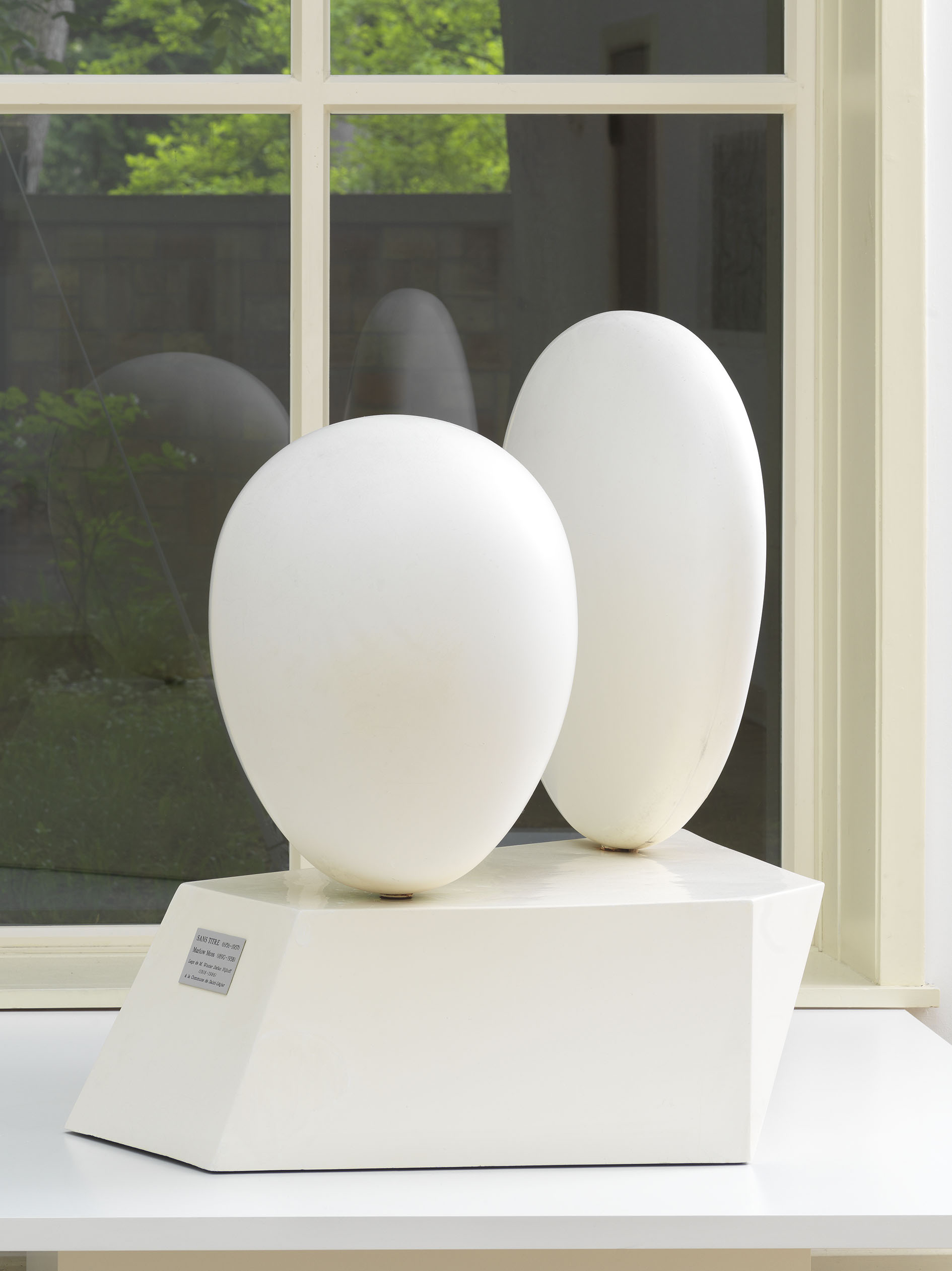 Foto: Jens Ziehe
Why plastics require particular care
Over time, plastics undergo natural aging processes that are also reflected in their appearance. While some materials remain relatively stable, others can begin to undergo rapid, destructive, and irreversible degradation processes within just a few years. This is precisely why it is essential to closely examine each object in terms of its individual material properties:
- Which plastics were used?
- In what ways were they processed by hand or manufactured industrially?
- What specific degradation and aging processes do they undergo?
Based on these findings, I develop conservation and restoration plans that ensure the long-term preservation of the objects —whether in storage facilities, in exhibition settings, during loan arrangements, or during transport.

Range of materials
My area of expertise covers a wide range of plastics and synthetic materials. I have extensive experience in the conservation and restoration of:
- Polymers & foams: PUR soft and rigid foams, Styrofoam (polystyrene), acrylates, and casting resins
- Sensitive plastics: Soft PVC, cellulose nitrate, and cellulose acetate
- Elastomers & natural materials: Natural and synthetic rubber, as well as silicones and waxes
- Composite materials: films, synthetic coatings, and special adhesives (e.g., for polyethylene)
Services
Preventive conservation
- Development and manufacture of custom-designed mounts, supporting structures, and suitable packaging solutions.
- Use of absorbers to regulate and reduce harmful environmental impacts.
Conservation treatments
- Professional treatment of breaks, cracks, and surface damage.
- Production of replacement and supplementary parts.
- Restoration, cleaning, and stabilization of objects.
Pragmatic and Object-Specific Museum Solutions
- Professional supervision of loaned items and exhibition setups.
- Conducting inventories, including condition assessments and risk analyses.
- Implementation of methods that are gentle on materials for labeling plastic exhibits with inventory numbers.
- Development of suitable conservation solutions for historic household appliances, including their electrical cords.
- Low-oxygen vacuum sealing of natural rubber objects susceptible to oxidation to minimize oxidative degradation processes.
Academic background & career
My enthusiasm for this highly specialized field dates back to my college years and is based on a solid international education:
University of Amsterdam
As part of my master’s program in “Art History and Archaeology,” I completed a one-semester internship in the sculpture restoration department at the Stedelijk Museum in Amsterdam. The focus of the internship was Naum Gabo’s completely transparent Plexiglas and nylon monofilament sculpture, “Linear Construction in Space No. 2.”
SRAL / Kröller-Müller Museum
My thesis for the “Restoration of Paintings and Painted Objects—Specialization in Modern and Contemporary Art” program at SRAL (Maastricht, NL) was completed in collaboration with the Kröller-Müller Museum. As part of the “Operation Panamarenko” project, the focus here was also on synthetic materials in artistic practice and their restoration.
German Historical Museum
In my position at the German Historical Museum, which I have held since 2020, my work focuses on the preventive conservation and documentation of three-dimensional plastic objects. I use Fourier-transform infrared spectroscopy (FTIR) to identify the plastics.
Expertise & research collaborations
Ongoing dialogue with colleagues and engagement with new research findings provide important impetus for the further development of expertise in plastics. The close connection between scientific research and restoration practice forms the foundation for new insights, innovative solutions, and the transfer of knowledge.
Future Talks (Munich)
Contribution of editorial content to all previous publications in the international conference series “Future Talks” organized by the Neue Sammlung in Munich. The series is dedicated to the preservation of modern materials in art and design and promotes international professional exchange.
International research and museum collaborations
Academic exchange and professional collaboration with national and international institutions, including the Berlin University of Applied Sciences (HTW), the University of Amsterdam, the Heritage Science Lab Ljubljana (HSLL) at the University of Ljubljana, the Royal Danish Academy in Copenhagen, and, currently, the Kiscelli Museum (Budapest History Museum).
Workshops and seminars
Development and conduct of workshops and seminars in which theoretically grounded knowledge and practical experience in the restoration of plastics are shared. These sessions provide a forum for group discussion of specific issues.
Contact
For a conservation treatment or advice, you can reach me on +49 177 7797333 or by email at claartje@vanhaaften.de.